

Deep learning often sounds like a complex mystery. It’s one of those buzzwords that gets thrown around in tech conversations, yet very few people can explain what it actually means. The truth is, once you strip away the technical language, deep learning is easier to understand than most people think. It’s not magic. It’s math, data, and logic working together to make computers “think” in a way that feels human.
The foundation: what deep learning really is
At its core, deep learning is a branch of artificial intelligence that teaches computers to learn patterns from large amounts of data. You can think of it as a learning process similar to how our brains recognize things. When you see an image of a cat, you don’t analyze every pixel. You just know it’s a cat because your brain has seen thousands of cats before.
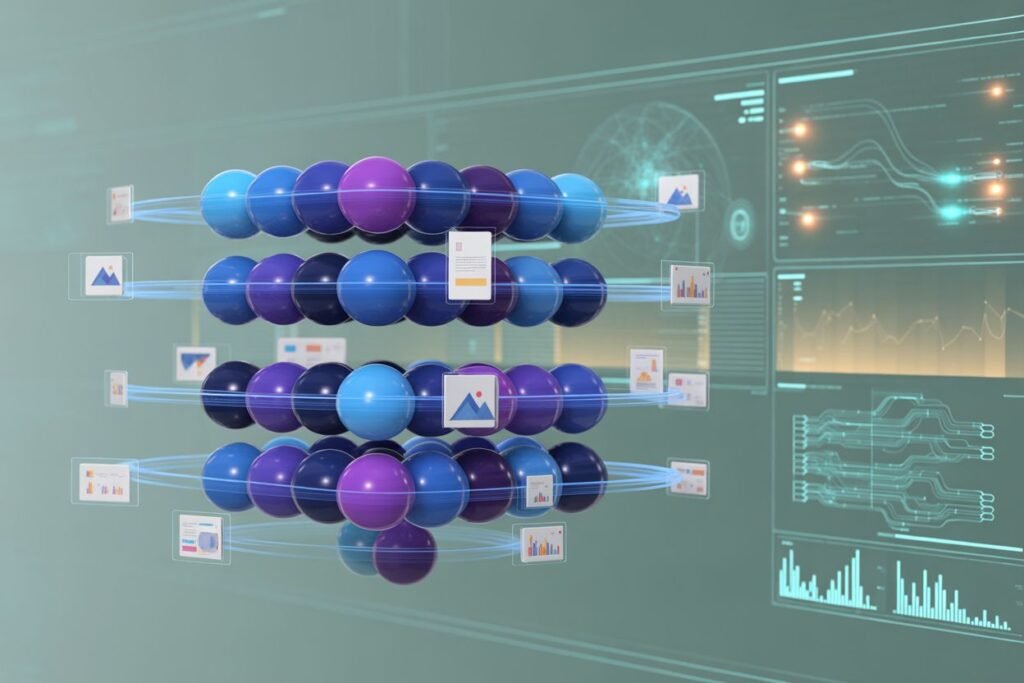
Deep learning works the same way. It’s powered by something called a neural network, a system inspired by the human brain. A neural network is made up of layers of connected “neurons,” which process information and pass it along to the next layer. The first layers detect simple things like edges or colors. Deeper layers start recognizing shapes, objects, and even meanings.
That’s why it’s called deep learning because it uses many layers to learn at different levels of abstraction.
Why deep learning matters
The reason deep learning has become so important is that it allows machines to handle tasks that used to require human intelligence. Tasks like recognizing faces in photos, translating languages, driving cars or generating text are now possible because of deep learning.
For example, when you talk to a voice assistant like Siri or Google Assistant, deep learning models understand your words, interpret your intent, and respond naturally. When Netflix recommends a show, deep learning analyzes what you’ve watched before and compares your habits to millions of others.
These models don’t just follow static rules. They improve over time as they see more data. That’s why your recommendations or AI tools become more accurate and personal the longer you use them.
The learning process
So, how does deep learning actually learn? It starts with training. During training, a model receives huge amounts of labeled data like thousands of cat and dog images and makes guesses. If it guesses wrong, it adjusts its internal settings through a process called backpropagation.
Imagine you’re teaching a child to tell the difference between cats and dogs. At first, they might get it wrong. You correct them, and they slowly learn the difference. That’s exactly what happens with a neural network.
Over time, the model becomes better at recognizing patterns on its own. Once trained, it can identify a cat in a completely new image it has never seen before.
Key components of deep learning
There are a few key pieces that make deep learning possible:
- Data: Deep learning needs tons of it. The more diverse and accurate the data, the better the model performs.
- Neural networks: These are the core structures that mimic the way human brains process information.
- Training: The phase where models learn patterns through repetition and correction.
- Computational power: Deep learning needs powerful GPUs to handle large datasets and complex calculations.
- Optimization algorithms: These adjust the network’s weights to reduce errors during training.
Together, these components create systems that can solve problems we once thought were too complex for machines.
Real world examples
Deep learning is everywhere. If you’ve ever used a photo app that automatically enhances images, that’s deep learning. It identifies the subject, adjusts lighting, and sharpens details.
In healthcare, deep learning helps detect diseases from X-rays and MRI scans faster than some human doctors. In finance, it predicts market trends and detects fraud. In transportation, it’s behind self-driving cars that can read road signs and make split-second decisions.
Even creative tools like text-to-image generators and AI music composers rely on deep learning to understand prompts and generate realistic outputs.
Why deep learning is different from traditional AI
Before deep learning, most AI systems used manual programming and rules. For example, if you wanted a computer to recognize a cat, you’d have to describe every feature fur, ears, eyes, tail and hope the system could identify it correctly.
Deep learning doesn’t need that kind of human guidance. It learns by itself from examples. The more data it sees, the smarter it becomes. This ability to self-learn from experience is what makes deep learning revolutionary.
The future of deep learning
As technology advances, deep learning is becoming more accessible. What used to require massive research labs can now be done on laptops or cloud services. Companies are using deep learning not only to automate tasks but also to innovate in completely new ways.
We’re already seeing its impact in creative fields. Artists use deep learning to design new visuals. Musicians use it to generate melodies. Developers build tools that can code or design websites using natural language prompts.
Still, deep learning has limitations. It requires a lot of data and energy. It can also make mistakes that seem strange to humans because it doesn’t “understand” context the way we do. The next big challenge is making deep learning models more transparent and efficient, so we can trust their decisions.
Final thoughts
Deep learning might sound like advanced technology, but it’s really just about teaching computers to recognize patterns and make decisions like we do. It’s transforming industries, shaping creativity, and changing how we interact with technology every day.