
Data is everywhere. Every time you scroll on social media, make a purchase online, or stream a video, you generate data. But what happens to all that information?
This is where data science steps in. It’s the field that turns messy, raw data into insights, predictions, and smarter decisions. And when combined with artificial intelligence, it becomes one of the most powerful forces shaping our world.
Understanding what data science really Is
At its core, data science is about understanding patterns in data and using them to solve problems. It mixes math, statistics, and programming with a bit of creativity. A data scientist gathers information, cleans it, studies it, and builds models to extract meaning. The goal is not just to find answers, but to make data useful.
Think of it as detective work. A data scientist collects clues (data), looks for relationships, and finally presents a story that helps people make better choices. For example, Netflix uses data science to recommend shows based on what you’ve watched before. Spotify does the same with music. Even hospitals use it to predict patient outcomes and improve treatments.
The tools behind the process
Data science uses a mix of tools and techniques. The most common ones include Python, R, SQL and visualization libraries like Matplotlib or Tableau. These tools help scientists collect data, clean it, analyze trends, and visualize results.
But the process doesn’t stop there. Once data is organized and understood, machine learning comes into play. That’s where artificial intelligence starts to connect with data science in a meaningful way.
How data science and AI work together
Artificial intelligence is all about creating systems that can think and learn like humans. But AI needs something to learn from — and that something is data. Without data, AI models can’t recognize patterns or make predictions.
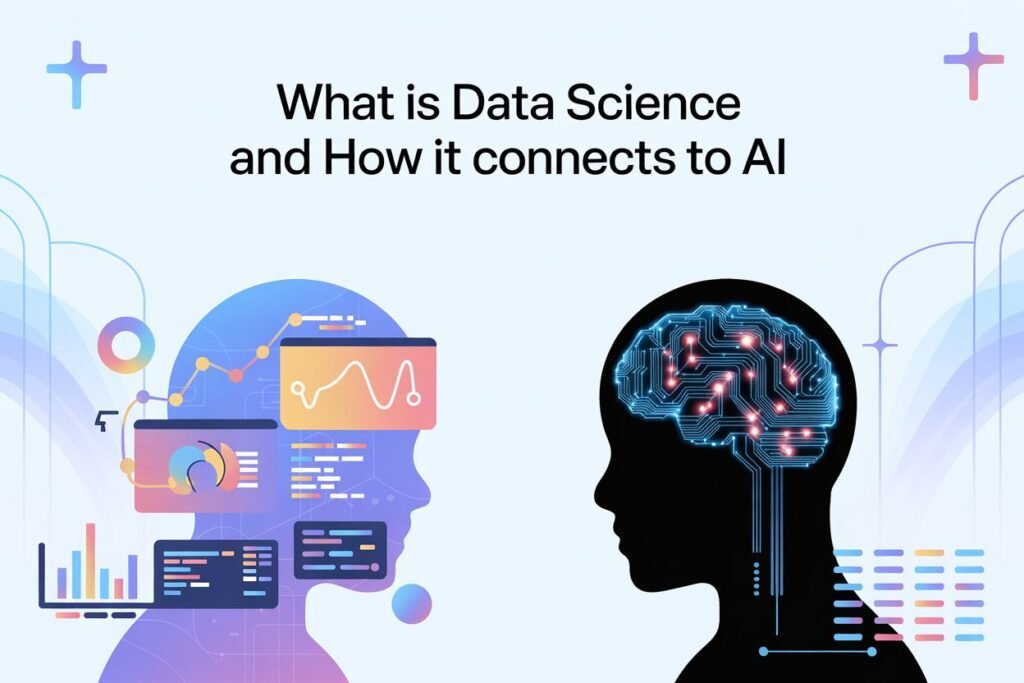
Think of data science as the foundation, and AI as the structure built on top. Data science collects and prepares the information, while AI uses that information to make intelligent decisions. When you combine the two, you get systems that can not only process massive amounts of data but also learn and improve on their own.
For instance, in image recognition, data science helps prepare thousands of images labeled as “cat” or “dog.” Then AI models, such as neural networks, learn from these examples to identify new images accurately. It’s the teamwork between data science and AI that makes this possible.
The importance of machine learning in the connection
Machine learning acts as the bridge between data science and AI. It allows computers to learn automatically from data without being explicitly programmed. Once a data scientist has prepared the dataset, machine learning algorithms start analyzing it, identifying hidden patterns, and making predictions.
Let’s take an example. Suppose a company wants to predict customer churn when users stop using their product. A data scientist gathers historical data like user activity, purchase history, and support tickets. Machine learning algorithms then use that data to find which factors increase the chance of a customer leaving. This combination helps businesses act before it’s too late.
Real-World examples of data science and AI in action
The connection between data science and AI isn’t just theoretical it’s happening all around us.
- Healthcare: AI models trained on medical data can detect diseases earlier and recommend treatments. Data science ensures the data is accurate and properly processed.
- Finance: Fraud detection systems rely on data science to understand normal transaction patterns and on AI to flag unusual activity in real time.
- Marketing: Data science segments audiences and tracks performance, while AI personalizes ads and predicts which products users will buy next.
- Transportation: Companies like Uber and Tesla use both fields to improve navigation, predict demand, and optimize routes.
These examples show how the synergy between data science and AI drives smarter, faster decisions in every industry.
Why data science Alone is not enough
While data science is powerful, it has limits on its own. It can describe what happened and even why, but AI takes it further by deciding what to do next. Data science focuses on insights; AI focuses on action. When you merge them, you move from just understanding data to creating systems that can learn and act on their own.
The future of data science and AI
The future of both fields looks deeply intertwined. As data becomes more complex from text and video to sensors and voice the need for AI to interpret it will only grow. At the same time, data science will remain essential for ensuring that the data feeding these systems is accurate, ethical, and unbiased.
New tools are also simplifying the process. Platforms like Google Cloud AI, DataRobot, and Hugging Face make it easier to build models without deep programming knowledge. This democratization means more people can explore AI and data science without being professional coders.
Getting started in data science and AI
If you’re new to both fields, start by learning how to handle data. Understand how to collect, clean, and visualize it. Tools like Python, Pandas, and Excel are great places to begin. Once you’re comfortable, explore machine learning libraries like Scikit-learn or TensorFlow to see how AI learns from your data.
Online courses, YouTube tutorials, and hands-on projects can help you build confidence. The key is consistency and curiosity not perfection.