
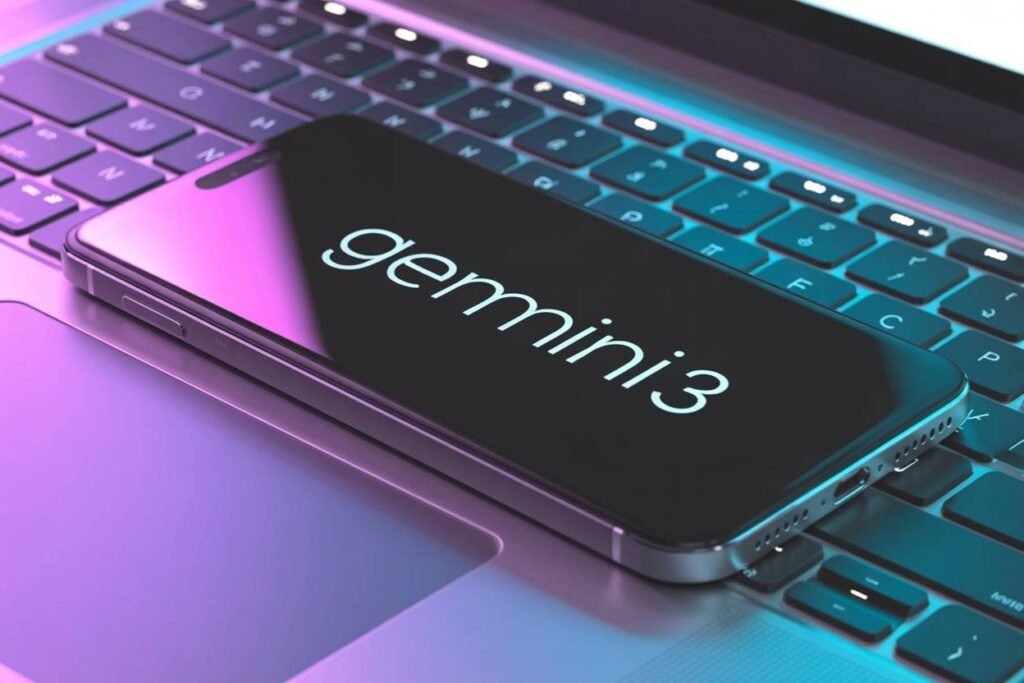

Google launched Gemini 3 on Tuesday in San Francisco and placed the new model inside its search engine from the moment it went live. The company says this is its most advanced AI system so far and it arrives at a time when the competition in artificial intelligence is moving fast and investors want to see real business results. The update marks a clear shift in how Google plans to release and deploy its models. Gemini 3 now powers consumer and enterprise features on day one instead of waiting weeks or months.
Alphabet CEO Sundar Pichai described Gemini 3 as the most intelligent model the company has produced. During a press briefing Google executives said the model is leading several well known benchmarking tests used in the AI industry. Even with strong benchmark performance the company focused more on the model’s practical impact because investors are watching how new models translate into revenue. Alphabet’s stock has risen this year thanks in part to strong demand for the cloud division’s AI tools.
The biggest change is the model’s instant integration into Google Search. For the first time the newest model sits behind search results from the start. Paying subscribers will see it through AI Mode, a feature that replaces traditional links with generated answers for complex queries. This is a major sign of where search is heading. Google believes fast rollout is essential. Koray Kavukcuoglu, Google’s chief AI architect, said Gemini is now reaching users faster than any previous generation.
The company presented several new features made possible by improvements in reasoning, coding, and task management. The most talked about addition is Gemini Agent, a tool that can complete multi step tasks. It can organize email inboxes, plan travel, or handle routine digital work without constant user input. This moves Google closer to the universal assistant that AI chief Demis Hassabis has talked about for years. For a long time the idea was described internally as AlphaAssist and Gemini Agent looks like the public version of that vision.
Google also updated the Gemini app. It no longer acts like a simple chat box. The app now returns responses that look almost like full webpages with visuals and interactive elements. During the demonstration the team showed how the model could create a gallery of Van Gogh paintings with notes about each piece. This kind of generation can reduce the need to visit outside websites. It also raises questions for content publishers who depend on search traffic to earn revenue. If AI responses replace clicks then publishers could see less visibility in search results.
For developers Google previewed Antigravity, a new software environment designed for autonomous coding work. Within this platform AI agents can plan coding tasks, execute them, and review them. This is part of a broader trend of using AI to automate large sections of software development. Google is positioning itself directly against tools from companies like OpenAI and Microsoft that already provide AI coding assistants.
Gemini 3 arrives in an environment where AI updates are becoming frequent and often similar across the industry. Many models receive attention only when they fail. Earlier this year Meta faced criticism when one of its models produced inaccurate or strange outputs. Developers are trying to create products that show clear value instead of relying on benchmark results. That pressure is likely why Google focused so strongly on day one product integration.
Google has an advantage because it controls search, Gmail, YouTube, and Android. These platforms give the company immediate distribution for new AI behavior. If it decides to push Gemini 3 into each of these products then millions of users will experience the update without needing to install anything. This could accelerate adoption and strengthen Google’s position in the AI market. The company has been under pressure from OpenAI and Anthropic which both continue to release strong large language models and agent systems.
The search integration is the most significant part of the announcement. Search makes up a large portion of Alphabet’s revenue and any shift in how results are delivered can shape the future of the web. Google has said for years that AI will transform search but this is the first time a major update happened instantly. The change also signals that AI generated answers will play a bigger role. For people who depend on Google for traffic this may force them to rethink how they produce and format content.
The rise of AI agents is another important trend reflected in the Gemini 3 launch. Many companies are working on assistants that take action rather than simply answer questions. Gemini Agent shows Google is ready to compete in that direction. If the technology works well it could help people automate everyday workflows and reduce manual digital tasks. For businesses this could mean faster internal operations and lower costs.
The focus on developers with Antigravity suggests Google wants to keep engineers inside its ecosystem. Automated coding platforms can reduce development time and make it easier for teams to prototype ideas. If Antigravity gains adoption it could influence how software teams plan projects and how companies build new digital tools. It also shows Google wants to use AI to support both creative and analytical work.
Gemini 3 demonstrates that Google is trying to balance innovation and business impact. The company cannot rely only on large model releases to impress markets. It needs to show that AI can strengthen its products, boost revenue, and maintain its dominance in search. By shipping Gemini 3 directly into revenue generating products Google is signaling that AI is no longer an experimental layer. It is becoming a standard part of the Google experience.
With more companies entering the AI space competition will continue to intensify. Google is betting that speed, scale, and seamless integration across its products will keep it ahead. The launch of Gemini 3 shows a shift toward faster deployment, more ambitious AI assistants, and deeper integration into everyday digital tools. As users and businesses interact with these new systems the impact of this update will become clearer over the coming months.